


In the current digital age, the integration of technology in educational paradigms has become increasingly prevalent, with educational games emerging as a pivotal innovation. The keyword '88jl' may lead many to an expansive category dedicated to such learning tools on various platforms. Educational games stand at the intersection of entertainment and education, providing a medium where learning objectives are met through engaging interactive experiences.
The appeal of educational games lies in their ability to enhance traditional learning methods by providing practical application and immediate feedback. These games foster critical thinking and problem-solving skills in a stimulating environment, catering to different learning styles. Whether it is through adventures in history, explorations in science, or challenges in mathematics, these games provide students with opportunities to apply theoretical knowledge in dynamic scenarios.
Moreover, educational games are not limited to young learners but span across age groups, making them an invaluable resource for lifelong learning. Adults are increasingly embracing these games as a form of skill-building, professional development, and even mental exercise. Language learning apps and simulation games for business, medicine, or the arts, illustrate the vast applications of this genre. The interactive nature of games also encourages collaboration and communication among peers, fostering a community learning atmosphere.
Developers are continuously innovating within this genre to cater to evolving educational goals and technological advancements. The advent of augmented reality (AR) and virtual reality (VR) presents new horizons for educational game development. These technologies promise immersive experiences that can simulate real-world scenarios, providing deeper understanding and engagement compared to traditional formats.
The challenges in this genre primarily involve aligning game mechanics with curriculum standards to ensure educational integrity and balancing entertainment elements with learning outcomes. Nonetheless, the potential benefits educational games offer continue to outweigh these challenges, leading to increased adoption in educational settings worldwide.
As the demand for digital learning grows, educational games will likely become even more integral to curricula and personal learning journeys. By transforming the way knowledge is acquired and applied, they hold the promise of making education more accessible and enjoyable for future generations.
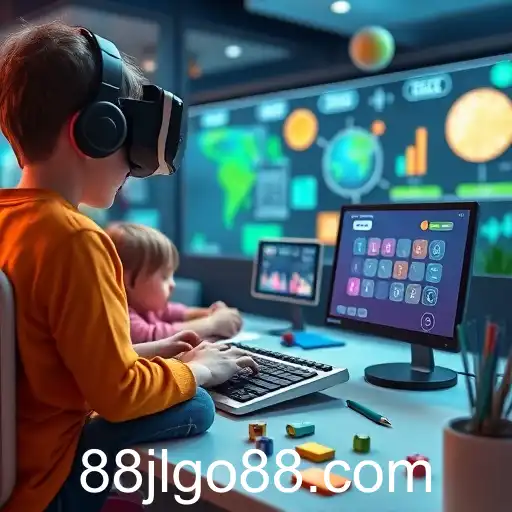
An exploration into how educational games are transforming the landscape of learning for diverse audiences.

